
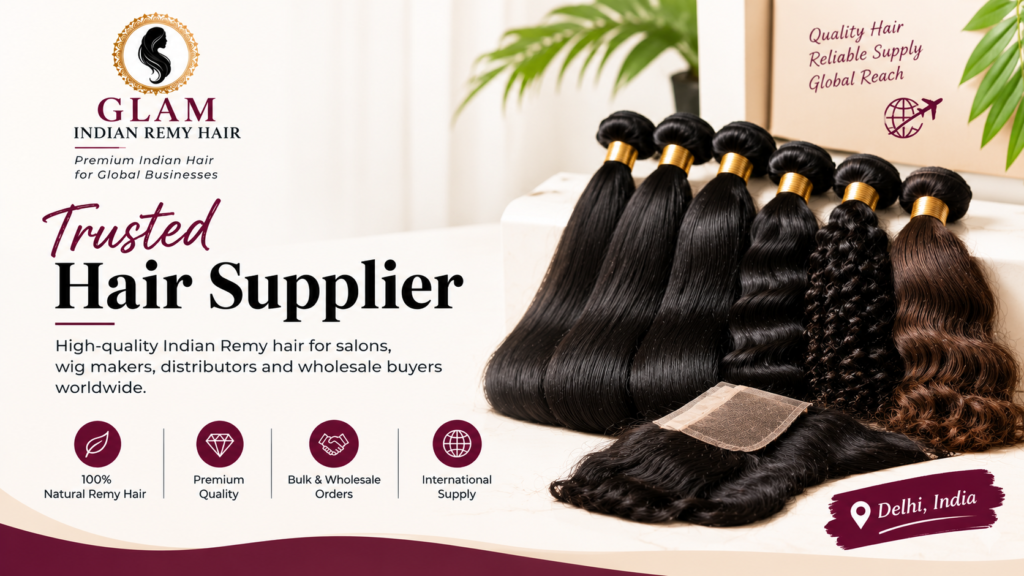
Whether you run a salon, sell wigs online, or are just starting a hair extension brand, one decision shapes your business more than any other: choosing the right hair supplier. Good hair keeps customers coming back. Bad hair brings refunds, bad reviews, and sleepless nights.
The market is full of suppliers, and many of them make big promises. This guide walks you through what to look for, what to avoid, and which questions to ask before you place your first order.
What Does a Hair Supplier Actually Do?
A hair supplier sources raw or processed human hair (or synthetic hair) and sells it to businesses in bulk or wholesale quantities. Depending on the supplier, you may get:
- Raw hair bundles
- Machine weft and hand-tied weft extensions
- Clip-ins, tape-ins, and keratin tip (U-tip) extensions
- Lace wigs, frontals, and closures
- Custom-made wigs with your own branding
Some suppliers are direct manufacturers. Others are middlemen who buy from factories and add their own margin. Knowing which one you’re dealing with helps you understand pricing and quality control.
Why Your Choice of Hair Supplier Matters
Your supplier affects almost everything about your business:
- Product quality: Hair that tangles, sheds, or loses its shine after two washes will damage your reputation fast.
- Profit margins: The right price lets you stay competitive and still earn well.
- Delivery time: Late shipments mean lost sales and unhappy customers.
- Brand trust: Your customers don’t know your supplier. They only know your brand, so every problem lands on you.
7 Things to Check Before Choosing a Hair Supplier
1. Hair Quality and Type
Ask exactly what kind of hair you’re buying. Terms like “100% human hair” are used loosely, so look for specifics:
- Raw hair: Unprocessed, cuticles intact and aligned in one direction. It lasts longest and is usually the most expensive.
- Virgin hair: Never chemically treated, but may not be as carefully sorted as raw hair.
- Remy hair: Cuticles are kept aligned, which reduces tangling.
- Non-Remy hair: Cuticles are mixed, so it tangles more and usually costs less.
A good supplier will explain these clearly and won’t dodge the question.
2. Samples Before Bulk Orders
Never place a large order without testing samples first. Order a few bundles and check:
- Does the hair feel soft and look natural?
- Does it hold a curl or straighten well?
- Does it tangle or shed after washing?
- Does the color match the photos?
Wash it, style it, and wear it for a week if you can. A supplier confident in their product will happily send samples, even if you pay for them.
3. Reviews and Reputation
Look beyond the testimonials on the supplier’s own website. Check:
- Independent review sites and social media
- Business forums and hair-industry groups
- Real customer photos and videos
- How the supplier responds to complaints
If a hair supplier has no online presence or only perfect reviews that look copied, be careful.
4. Clear Pricing and No Hidden Costs
Cheap is not always good, and expensive is not always better. Ask for a full price breakdown including:
- Cost per bundle or piece
- Shipping and customs charges
- Payment fees
- Costs for custom branding or packaging
If the price is far below what other suppliers charge, there’s usually a reason, often poor-quality or mixed hair.
5. Minimum Order Quantity (MOQ)
Many suppliers set a minimum order. If you’re a small business, look for a hair supplier with a low MOQ so you can test the market without tying up too much money. As you grow, you can negotiate better rates for larger orders.
6. Shipping, Delivery, and Return Policy
Ask these questions upfront:
- How long does delivery take?
- Which courier do they use, and can you track the parcel?
- What happens if the hair arrives damaged or isn’t as described?
- Do they offer replacements or refunds?
A supplier with a clear return policy shows that they stand behind their products.
7. Communication and Support
Pay attention to how the supplier talks to you before you pay. Do they reply quickly? Do they answer questions properly, or give vague replies? A supplier who is slow and unclear now will be even harder to reach when something goes wrong later.
Red Flags to Watch Out For
Walk away, or at least be extra careful, if you notice any of these:
- Prices that seem too good to be true
- No samples available
- Pressure to pay quickly or to pay only by bank transfer to a personal account
- No physical address or company details
- Stock photos only, with no real product videos
- Vague answers about where the hair comes from
- No written policy for returns or complaints
Trust your instincts. If something feels off, it usually is.
Where to Find a Good Hair Supplier
There are several ways to find suppliers, each with pros and cons:
- Online wholesale platforms: Easy to compare many options, but you must verify each seller carefully.
- Trade shows and expos: You can see and touch the product and meet suppliers in person.
- Referrals: Other hair business owners often share honest recommendations.
- Direct manufacturers: Better pricing and customization, but usually higher MOQs.
- Social media and industry groups: Useful for discovery, but always verify before buying.
Whatever source you use, always do your own checking.
Tips for Building a Long-Term Relationship
Once you find a good hair supplier, treat them as a partner rather than just a seller:
- Start small, then grow. Prove the quality over a few orders before increasing volume.
- Pay on time. Reliable payment often earns you better terms and priority service.
- Give honest feedback. Good suppliers want to improve.
- Keep records. Save invoices, chats, and photos in case of disputes.
- Consider a backup supplier. Don’t depend on only one source, especially as your business grows.
Questions to Ask Every New Hair Supplier
Keep this checklist handy when you speak with a new supplier:
- Where does your hair come from?
- Is it raw, virgin, or Remy?
- Can I get samples, and what do they cost?
- What is your MOQ?
- How long does production and shipping take?
- Do you offer private labeling or custom packaging?
- What is your return and replacement policy?
- Can I speak with existing customers?
Frequently Asked Questions
Q1. How do I know if a hair supplier is genuine?
Check for a registered business address, real customer reviews, product videos, and a clear policy. Always order samples first.
Q2. Is a direct manufacturer better than a middleman?
Manufacturers usually offer lower prices and customization, but with higher minimum orders. Middlemen may suit smaller orders but add extra cost.
Q3. How many samples should I order?
Two or three different textures or lengths are enough to judge quality and consistency.
Q4. What is a fair price for wholesale human hair?
Prices vary by length, texture, and type. Compare quotes from at least three suppliers, and be careful with anything much cheaper than the rest.
Q5. Can I get my own brand on the packaging?
Many suppliers offer private labeling. Ask about the cost and MOQ for custom packaging.
Final Thoughts
Finding the right hair supplier takes patience, but the effort pays off. Focus on quality, test samples, compare prices honestly, and watch for red flags. A reliable supplier becomes the backbone of your business, helping you deliver hair your customers love and trust.
Take your time, ask questions, and don’t rush into big orders. The best supplier is not the cheapest one, but the one who delivers consistent quality and treats you like a long-term partner.


