
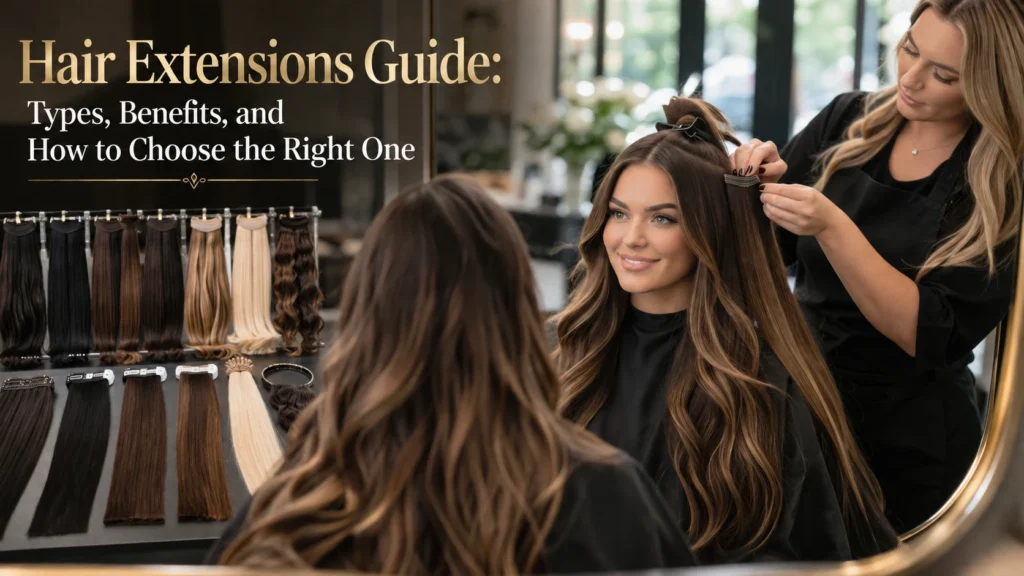
Ever stared at a photo of a celebrity’s thick, bouncy hair and wondered how it’s even possible? Chances are, it’s not magic it’s hair extensions. Whether you’re dreaming of Rapunzel-length locks for a wedding or just want a little extra volume for everyday confidence, hair extensions can transform your look in under an hour. But with so many types, textures, and price tags floating around, picking the right one can feel overwhelming.
This guide breaks it all down in plain, simple language no jargon, no confusion. By the end, you’ll know exactly which extensions suit your hair, your budget, and your lifestyle.
What Are Hair Extensions?
Hair extensions are strands of hair (real or synthetic) that are attached to your natural hair to add length, volume, or both. They come in various forms clips, tapes, wefts, and fusion bonds and can be made from human hair or synthetic fibers.
The best extensions blend so seamlessly with your own hair that no one can tell the difference. The key to that seamless look lies in quality, texture matching, and proper application.
Remy, Virgin, and Double-Drawn: How to Spot Premium Indian Hair
Not all human hair extensions are created equal. If you’ve shopped around, you’ve probably seen terms like “Remy,” “Virgin,” and “Double-Drawn” thrown around a lot. Here’s what they actually mean:
| Term | What It Means | Why It Matters |
| Remy Hair | Hair where all cuticles run in the same direction (root to tip) | Prevents tangling and matting; hair stays smooth and silky longer |
| Virgin Hair | Hair that has never been chemically treated, dyed, or processed | Softer, more natural texture; takes color and styling better |
| Double-Drawn Hair | Hair sorted so that strands are nearly the same length from root to tip | Gives a thicker, fuller look without the “thin tail” appearance |
Indian hair is especially prized in the extensions world because it’s naturally strong, has a healthy sheen, and blends well with many hair types across the globe. If you’re buying Remy or Virgin Indian hair, always check for uniform cuticle alignment and a natural (not overly glossy or waxy) shine that’s usually a sign of quality processing.
Main Types of Hair Extensions
There are several ways to attach extensions, and each method has its own pros, cons, and ideal use case.
| Type | Pros | Cons | Longevity | Best For Indian Hair (Thick/Fine) |
| Clip-In Extensions | Easy to apply/remove, no commitment, beginner-friendly | Not ideal for daily wear, can slip if hair is very fine | 3–6 months (with proper care) | Great for both thick and fine hair; adjustable clips help fine hair hold better |
| Tape-In Extensions | Lightweight, lies flat, low maintenance | Needs professional application/removal, can slip in humidity or oily scalps | 6–8 weeks per application | Works well for fine to medium hair; may need repositioning sooner on very oily scalps common in humid Indian climates |
| Weft (Sew-In) Extensions | Long-lasting, no heat or glue involved | Requires braiding, can feel heavy, needs skilled stylist | 2–3 months | Best for thick hair that can hide the braid track underneath |
| Fusion/Bond Extensions | Very natural look, long-lasting | Uses heat or glue, can damage hair if removed incorrectly | 3–4 months | Suitable for thick hair; fine hair may experience more strain at the bond |
| Micro-Link/Micro-Bead Extensions | No heat or glue, gentle on hair | Can be visible if not applied correctly, needs periodic tightening | 3–4 months | Good for medium to thick hair; beads may slide on very fine strands |
Benefits of Hair Extensions
Hair extensions aren’t just about length they offer a surprising range of benefits:
- Instant volume and length without waiting years for your natural hair to grow
- Versatility to experiment with different hairstyles, colors, and textures without permanent commitment
- Confidence boost, especially for those dealing with thinning hair or hair loss
- Protective styling option, since some extensions allow your natural hair to rest underneath
- Special-occasion glam, perfect for weddings, parties, or photoshoots
Hair Extensions in India: Typical Costs, Lifespan, and Maintenance Cycles
If you’re shopping for extensions in India, costs vary widely depending on hair quality, type, and length. Here’s a general breakdown to help you budget:
| Extension Type | Approximate Price Range (INR) | Average Lifespan | Maintenance Cycle |
| Synthetic Clip-Ins | ₹1,500 – ₹4,000 | 1–3 months | Minimal; replace when frizzy |
| Human Hair Clip-Ins | ₹4,000 – ₹12,000 | 6–12 months | Wash and condition every 10–15 wears |
| Tape-Ins (Human Hair) | ₹8,000 – ₹20,000 | 6–8 weeks per set (reusable up to a year) | Reposition every 6–8 weeks |
| Weft/Sew-Ins | ₹10,000 – ₹25,000 | 2–3 months per install | Tighten braids every 4–6 weeks |
| Fusion/Bonds | ₹15,000 – ₹35,000+ | 3–4 months per install | Professional touch-up needed |
Prices can go higher for premium Remy or Double Drawn hair, which tends to last much longer with proper care sometimes over a year with multiple reinstalls.
How to Choose the Right Hair Extensions
Choosing extensions isn’t a one-size-fits-all decision. Here’s what to consider:
Hair Type & Texture
Your natural hair texture straight, wavy, curly, or coily should match your extensions as closely as possible. Mismatched textures are one of the biggest giveaways of “fake-looking” hair.
Matching Extensions to Indian Hair Texture and Shade
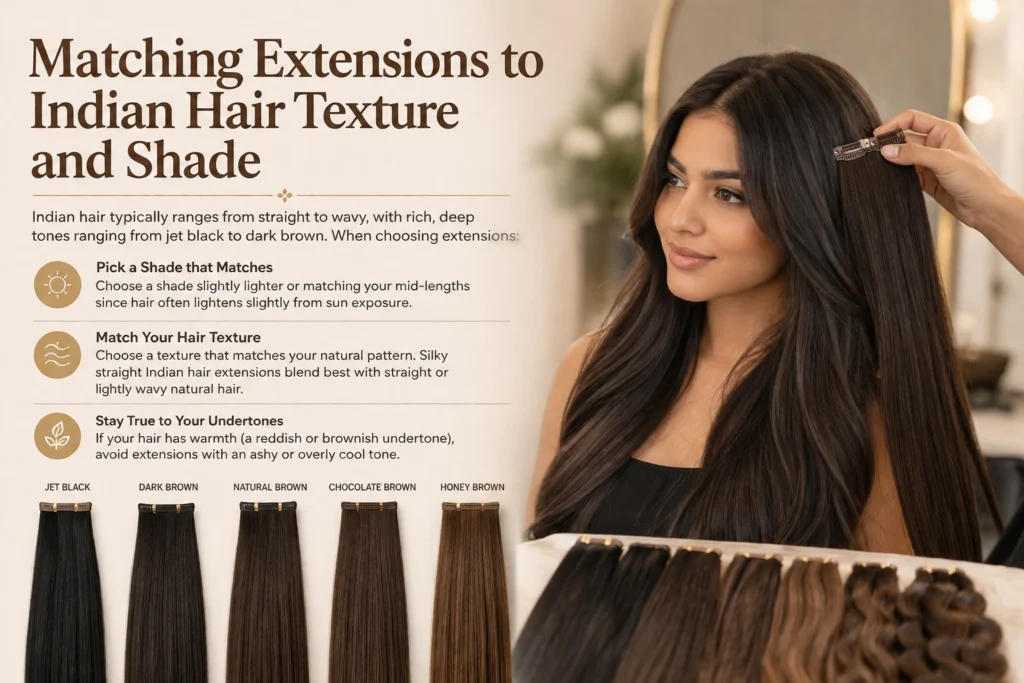
Indian hair typically ranges from straight to wavy, with rich, deep tones ranging from jet black to dark brown. When choosing extensions:
- Pick a shade slightly lighter or matching your mid-lengths (since hair often lightens slightly from sun exposure)
- Choose a texture that matches your natural pattern silky straight Indian hair extensions blend best with straight or lightly wavy natural hair
- If your hair has warmth (a reddish or brownish undertone), avoid extensions with an ashy or overly cool tone
Lifestyle & Maintenance
Ask yourself: Do you want a low-maintenance option you can put in and remove yourself, or are you comfortable visiting a salon every few weeks? Busy schedules usually pair better with clip-ins or tape-ins.
Budget
Human hair extensions cost more upfront but last significantly longer and look far more natural than synthetic ones. Think of them as a long-term investment rather than a one-time purchase.
Quick Visual Checklist: Shine, Weft Density, Shedding
Before buying, run through this simple checklist:
- ✅ Shine Should look natural and healthy, not plasticky or overly glossy
- ✅ Weft Density Should feel full but not stiff or overly thick at the base
- ✅ Shedding Test Gently run fingers through the strands; minimal to no shedding is a good sign
- ✅ Tangle Check Comb through a small section; quality hair resists tangling
Professional Consultation
If you’re new to extensions, a consultation with a stylist can save you money and disappointment. They can assess your hair density, scalp health, and recommend the safest attachment method.
Hair Extensions Care & Maintenance Tips
Proper care extends the life of your extensions significantly:
- Use sulfate-free shampoo and a lightweight conditioner
- Detangle gently, starting from the tips and working upward
- Avoid heavy oils near the roots or bonds, as they can weaken attachments
- Sleep with hair loosely braided or in a silk scarf to reduce friction
- Limit heat styling and always use a heat protectant
How to Prevent Damage While Wearing Extensions
- Never sleep with wet extensions this weakens both natural and extension hair
- Avoid pulling extensions into overly tight ponytails or buns
- Brush from the roots downward using a loop brush to avoid stress on the bonds or wefts
- Schedule regular check-ins with your stylist for tightening or repositioning
- Give your natural hair periodic breaks between installs to prevent strain
Common Mistakes to Avoid
Even well-meaning first-timers often slip up. Watch out for these common errors:
- Choosing extensions that don’t match your hair color or texture
- Skipping professional consultation for permanent methods like fusion or tape-ins
- Over-washing or under-washing extensions
- Using regular shampoo with sulfates that strip natural shine
- Ignoring scalp health and hygiene while wearing extensions
Why Glam Indian Remy Hair? Sourcing, Processing, and Quality Checks
Not all extension brands are transparent about where their hair comes from or how it’s processed and that matters more than most people realize. Ethically sourced Remy hair typically comes from donors whose hair is collected in a single ponytail, preserving the natural cuticle direction (which is what keeps hair smooth and tangle-free).
Quality-focused brands generally follow a few key practices:
- Single-donor sourcing to maintain consistent texture and cuticle alignment
- Minimal chemical processing, preserving the hair’s natural strength and shine
- Rigorous quality checks for shedding, tangling, and color consistency before packaging
- Double-drawn options for those wanting fuller, thicker-looking extensions
If you’re exploring premium Indian Remy hair extensions, it’s worth checking a brand’s sourcing transparency and customer reviews before committing to a purchase.
FAQs About Hair Extensions
1. How long do human hair extensions last?
With proper care, human hair extensions can last anywhere from 6 months to over a year, depending on the type and maintenance routine.
2. Are hair extensions bad for your natural hair?
Not if applied and removed correctly. Damage usually happens from improper application, excessive tension, or neglecting maintenance.
3. Can I dye my hair extensions?
Human hair extensions, especially Virgin or Remy hair, can generally be dyed, though it’s best to have this done professionally to avoid damage.
4. What’s the best hair extension type for Indian hair?
Since Indian hair tends to be thick and straight-to-wavy, weft or clip-in Remy extensions in matching textures usually blend most naturally.
5. How much do hair extensions cost in India?
Prices range from around ₹1,500 for basic synthetic clip-ins to ₹35,000+ for premium fusion installs using high-quality Remy or Virgin hair.
6. Can extensions be reused?
Yes, especially clip-ins and tape-ins, if cared for properly. Wefts and fusion extensions can often be reinstalled multiple times as well.
7. How do I know if I’m buying good quality Indian Remy hair?
Check for uniform cuticle direction, minimal shedding, natural shine, and transparent sourcing information from the seller.
Conclusion
Hair extensions can be a game-changer adding length, volume, and versatility without waiting for your natural hair to grow. The key is choosing the right type, texture, and quality for your specific hair and lifestyle, and taking proper care of them once installed.
If you’re ready to explore premium, ethically sourced Indian Remy hair extensions, browse the collection and find the perfect match for your hair goals: